Memory Prices Are Exploding: Why RAM Costs Are Surging Across the U.S. and Europe
futurestackio >> Tech News>> Memory Prices Are Exploding: Why RAM Costs Are Surging Across the U.S. and Europe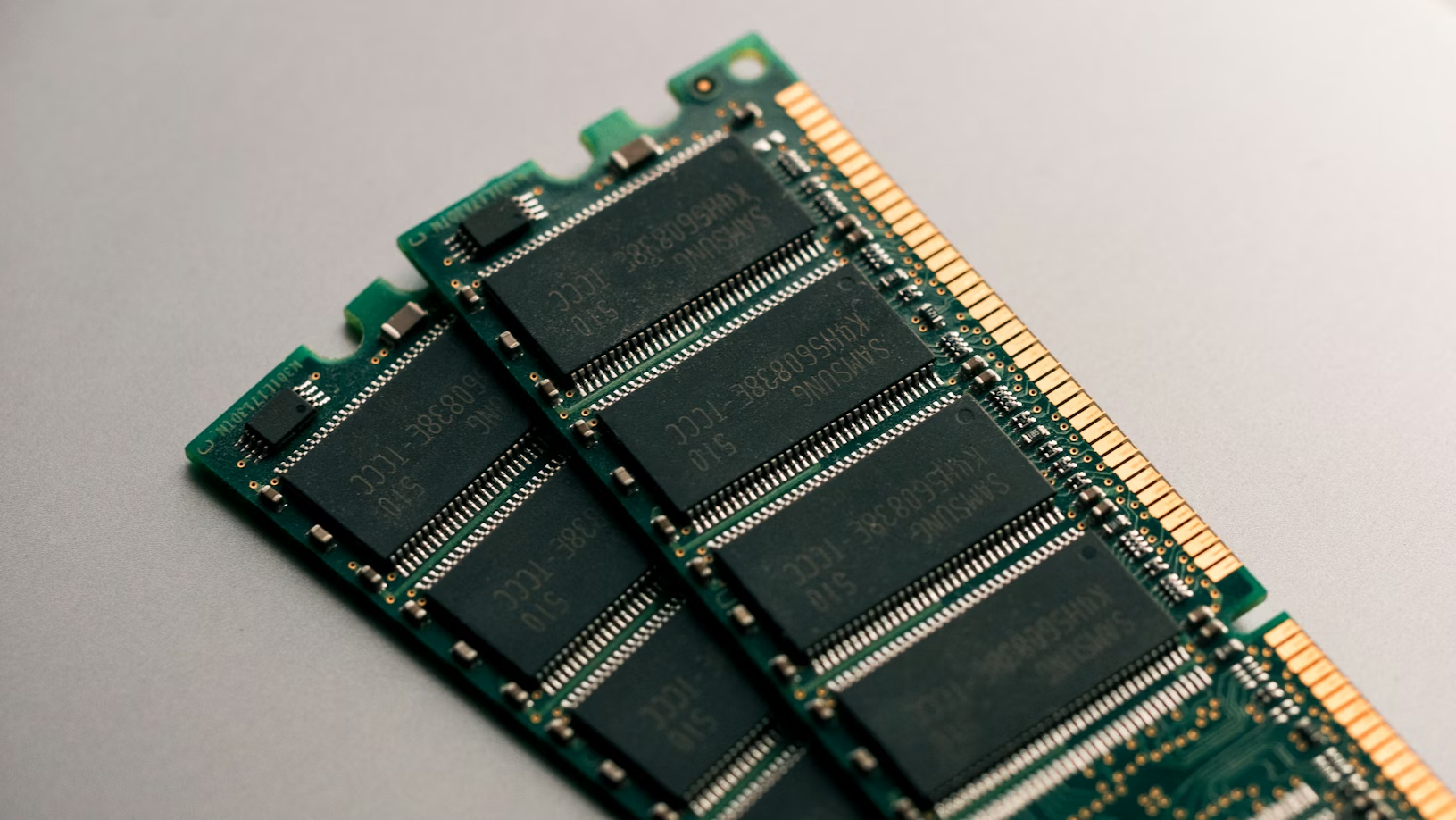
Memory Prices Are Exploding: Why RAM Costs Are Surging Across the U.S. and Europe
Memory prices have surged sharply since mid-2025, creating unprecedented challenges for consumers, enterprises, and data centers across the United States and Europe. By early 2026, mainstream DDR5 memory kits that sold for seventy to ninety euros in mid-2025 were fetching prices between three hundred and four hundred euros. High-capacity DDR5 kits, such as 32GB or larger modules, climbed above six hundred euros. Even DDR4 modules, historically more affordable, have seen prices more than double or triple over the past twelve months, fundamentally altering the economics of PC upgrades and server deployments.
In order to visualize the magnitude of the price changes, the following table summarizes approximate price ranges for common consumer memory modules:
| Memory Type | Price Mid‑2025 | Price Early‑2026 | Approx. Increase |
|---|---|---|---|
| DDR5 16GB Kit | €75–€90 | €300–€395 | 300–427% |
| DDR5 32GB Kit | €140 | €600+ | 330%+ |
| DDR4 16GB Kit | €25 | €75–€87 | 200–248% |
| DDR3 8GB Kit | €12 | €21 | 75% |
Beyond retail, contract and spot markets showed similar trends. Bulk DRAM prices rose by forty to fifty percent in late 2025, with projections for early 2026 showing further increases of up to fifty percent. These movements reflect not just temporary demand surges but structural shifts in how memory is produced and consumed. Manufacturers have prioritized high-performance, high-margin server-grade memory for AI workloads, reducing supply for consumer modules and contributing to these sharp price escalations.
AI-Driven Demand Reshaping the Market
A central driver of the memory price surge is the rapid growth of artificial intelligence infrastructure. Modern AI training clusters require massive amounts of high-density memory to feed GPUs and specialized accelerators. A single large AI deployment can consume more memory than thousands of conventional PCs combined. As hyperscale cloud providers expand AI capacity, they absorb a growing share of global memory output.
Memory manufacturers have responded by reallocating production toward premium server-grade and high-bandwidth memory products. While these generate higher margins and meet enterprise demand, they leave less inventory for standard DDR5 and DDR4 consumer modules. The reallocation marks a structural change in the market: unlike previous cycles dominated by consumer demand, AI and cloud workloads now dictate production priorities.
Supply Constraints and Production Challenges
The surge is also amplified by the slow pace of memory fabrication capacity expansion. Constructing a modern DRAM fab requires billions of dollars and multiple years before reaching volume production. Even when new fabs come online in late 2026 or 2027, they may not immediately alleviate supply shortages due to yield optimization, process complexity, and ramp-up time.
Older production lines, meanwhile, have been repurposed for high-margin products or retired altogether, further tightening the supply for standard modules. This combination of constrained supply and shifting demand profiles has caused rapid price spikes, with mid-range consumer kits sometimes experiencing increases of 300–400% within months.
Secondary Markets and Speculative Behavior
Speculative behavior in secondary markets has intensified the effect. Some modules are resold online at two to three times their original price, while regional shortages create further pressure on retail and OEM channels. The resulting volatility has made memory procurement more challenging for both consumers and businesses, and in some cases, buyers must pre-order modules months in advance to secure stock.
Consumer and PC Builder Impact
For consumers, the most immediate effect is on the total cost of PC builds. RAM, once a minor expense, now rivals CPUs and storage costs. Many PC builders and gamers have delayed upgrades or settled for smaller memory capacities. Laptop buyers face similar constraints, as manufacturers pass higher memory costs onto finished devices. Prebuilt systems now include higher memory costs in their base prices, making mid-range and high-performance configurations noticeably more expensive.
Gamers and content creators are particularly affected, as high-capacity memory configurations required for video editing, 3D rendering, and modern gaming now carry a premium. Some users are forced to compromise on speed or capacity, while others face significantly higher budgets to maintain performance levels.
Enterprise and Cloud Providers Under Pressure
Enterprise-scale buyers are impacted even more severely. Data centers deploying hundreds or thousands of servers see substantial increases in total capital expenditures. Even modest per-module price hikes multiply into millions of dollars across large deployments. Cloud providers must balance these higher hardware costs against competitive service pricing, sometimes adjusting offerings, memory allocation strategies, or hardware refresh cycles to manage expenses.
System integrators and enterprise clients are also revising procurement strategies, evaluating long-term memory contracts, and hedging inventory to mitigate volatility. Research labs, AI startups, and tech-heavy enterprises feel this pressure most acutely, as budgets that once sufficed for computing workloads now require major adjustments.
Is This a Bubble or a Structural Shift?
Industry experts debate whether the surge represents a temporary bubble or a structural market shift. Unlike past cycles, where price spikes corrected sharply once new capacity came online, AI-driven demand is unlikely to slow. Consumer PC demand may soften, but enterprise and AI workloads continue consuming memory at elevated levels, suggesting that prices may stabilize at higher baselines rather than returning to previous lows.
Historical memory cycles provide context: past DDR3 and DDR4 surges typically corrected within 6–12 months once supply expanded. Today, the market is dominated by AI, cloud, and data-center demand, introducing a more persistent upward pressure on prices that could last years rather than months.
Broader Implications for the Tech Industry
The ripple effects extend far beyond memory pricing alone. Device makers must reconsider product configurations and pricing strategies. Software developers are increasingly emphasizing memory efficiency. Procurement strategies rely more heavily on long-term contracts and inventory hedging. Smaller buyers, especially research labs and startups, face heightened exposure to rapid price swings and tighter budgets.
In the consumer electronics market, rising RAM costs may slow adoption of high-performance devices. Gaming systems, workstations, and even laptops see higher price points, affecting sales volumes. Enterprises face increased operational costs and must adapt IT budgets accordingly.
Looking Ahead
Through 2026, memory prices are expected to remain elevated. Even if quarterly growth slows, absolute pricing levels will likely remain historically high until new production capacity becomes operational. Consumers, PC builders, and enterprises must adjust expectations and budgets to accommodate these elevated memory costs.
What began as a routine recovery has now evolved into a defining structural shift. Memory pricing now reflects deeper changes in global computing demand, driven by AI and cloud infrastructure. The market will continue to shape technology economics, investment decisions, and hardware strategy across the U.S. and Europe for the foreseeable future.