The Next Era of Cloud: Hybrid, Private, and Sovereign Platforms Power AI Innovation
futurestackio >> Software / Internet>> The Next Era of Cloud: Hybrid, Private, and Sovereign Platforms Power AI Innovation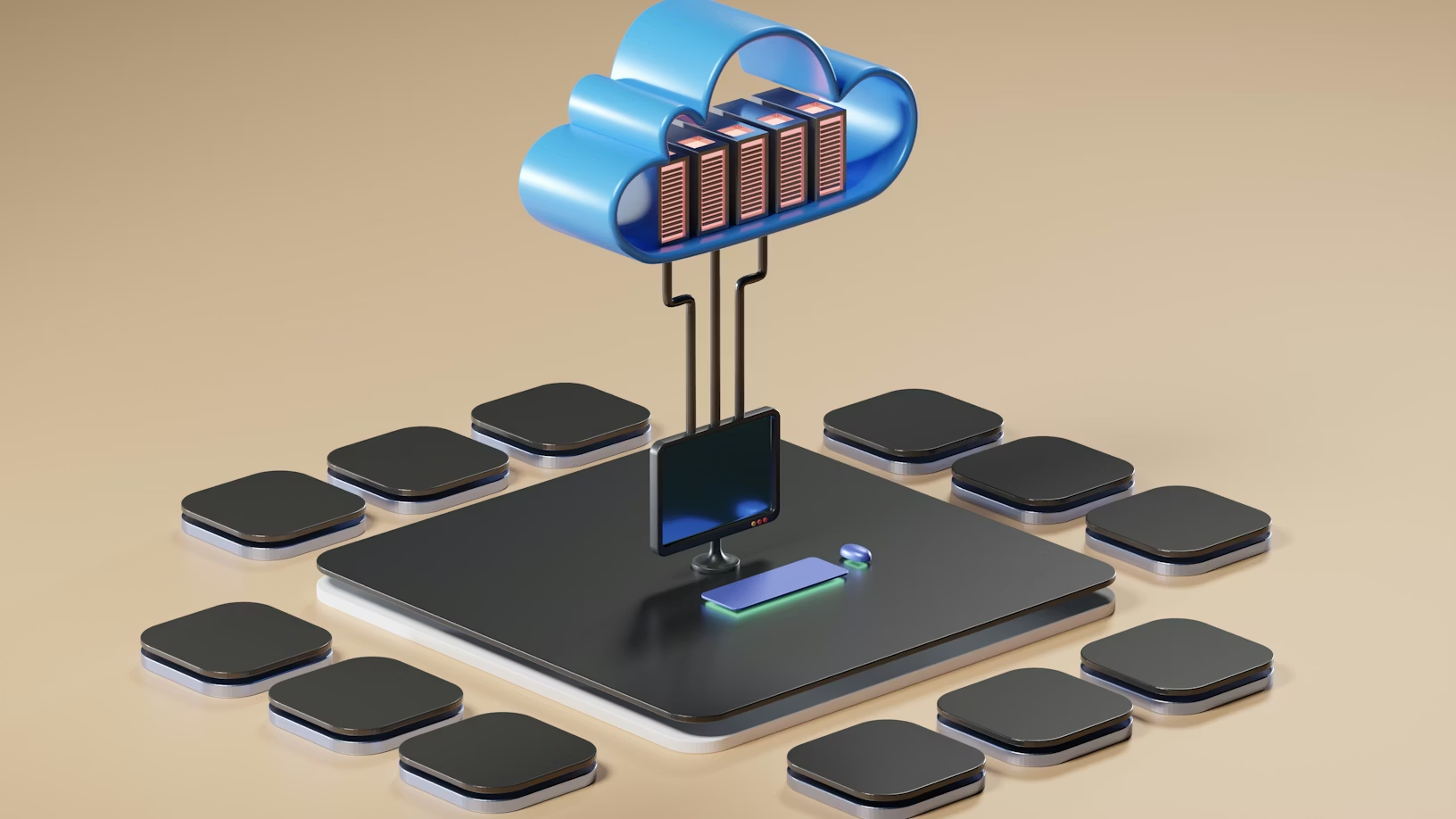
The Next Era of Cloud: Hybrid, Private, and Sovereign Platforms Power AI Innovation
Cloud computing is no longer just a matter of migrating workloads from on-premises data centers or optimizing operational costs. In 2026, the cloud is entering a strategic phase where hybrid cloud, private cloud, and sovereign cloud coexist to provide enterprises with secure, flexible, and AI-ready infrastructure. This transformation is driven by increasing demand for data security, regulatory compliance, and advanced AI capabilities, reshaping how organizations approach digital infrastructure.
From Cost Optimization to Strategic Platforms
Early cloud adoption focused primarily on public cloud services for scalability and cost efficiency. Enterprises migrated workloads to reduce capital expenditure, improve flexibility, and avoid managing physical hardware. While public cloud remains crucial, the paradigm has shifted.
Hybrid and private cloud platforms now allow businesses to balance performance, cost, and compliance. Enterprises can store sensitive data on private infrastructure while leveraging public cloud resources for compute-intensive AI workloads. This blended approach ensures that organizations can optimize costs without compromising data security or operational control.
At the same time, sovereign cloud platforms—cloud infrastructure built to meet national or regional regulatory and security requirements—are gaining momentum. Governments and organizations operating under strict data protection laws are increasingly deploying local cloud solutions, ensuring full compliance with data sovereignty regulations while still enabling modern cloud capabilities.
AI-Native Cloud Architectures
A defining feature of the next cloud era is native support for AI and intelligent applications. Unlike traditional cloud deployments that require retrofitting AI tools, modern hybrid, private, and sovereign clouds are built to handle massive data throughput, GPU acceleration, and distributed AI workloads from the ground up.
Key capabilities of AI-native cloud platforms include:
- Integrated AI frameworks and SDKs for large language models, computer vision, and predictive analytics.
- High-performance GPU and TPU clusters optimized for training and inference.
- Data locality and governance controls to ensure AI workloads comply with privacy laws.
- Automated orchestration and resource scaling, allowing AI pipelines to dynamically allocate compute based on demand.
By embedding AI capabilities into the infrastructure itself, organizations can accelerate development cycles, reduce operational complexity, and deploy intelligent applications more efficiently.
Enterprise Adoption and Case Studies
Many large enterprises in Europe and North America have begun adopting hybrid and sovereign cloud strategies:
- Financial services firms are moving sensitive transaction and client data to private or sovereign clouds while running AI-based fraud detection algorithms on hybrid platforms to leverage scalable compute.
- Healthcare organizations are deploying hybrid solutions to ensure patient data remains within regulated jurisdictions while AI models analyze imaging, diagnostics, and research datasets.
- Government agencies in the EU are adopting sovereign cloud solutions to replace U.S.-based software and cloud services, ensuring compliance with GDPR and local data residency laws.
This hybrid approach allows organizations to strike a balance between innovation, performance, and regulatory compliance, enabling faster AI adoption without risking security breaches or legal penalties.
Market Trends and Industry Impact
The global hybrid and sovereign cloud market is experiencing significant growth. Analysts predict that hybrid cloud adoption among enterprises will surpass 70% by 2027, while sovereign cloud deployments are expected to double over the next three years in Europe alone.
Factors driving this trend include:
- Regulatory pressures: Governments increasingly mandate local storage and processing of sensitive data, making sovereign cloud infrastructure a necessity.
- AI and data-driven innovation: AI workloads demand low-latency, high-throughput compute resources that traditional public clouds may not efficiently provide.
- Strategic digital sovereignty: Organizations aim to retain control over critical data assets while still leveraging scalable cloud resources for innovation.
Cloud providers are responding by offering pre-integrated AI services, local data centers, and hybrid orchestration tools, making it easier for enterprises to adopt multi-cloud strategies without compromising performance or compliance.
Challenges and Considerations
Despite the advantages, implementing hybrid, private, and sovereign cloud solutions is not without challenges:
- Complexity in management: Orchestrating workloads across multiple clouds requires sophisticated monitoring, automation, and governance tools.
- Integration hurdles: Legacy systems and applications may not easily migrate to hybrid or AI-native architectures.
- Cost considerations: While hybrid and sovereign solutions provide security and compliance, the initial investment and ongoing operational costs can be higher than pure public cloud models.
Organizations must carefully assess their workloads, regulatory requirements, and AI ambitions before committing to a multi-cloud strategy. Proper planning, skilled personnel, and cloud-native architecture expertise are essential for success.
The Future of Cloud and AI
The next era of cloud computing emphasizes flexibility, security, and intelligence. Enterprises that strategically combine hybrid, private, and sovereign clouds will unlock the full potential of AI, enabling advanced analytics, predictive modeling, and intelligent applications at scale.
As AI models grow larger and data sovereignty regulations tighten, the ability to deploy AI workloads efficiently while maintaining compliance will become a key differentiator for organizations. The cloud is no longer just a utility—it is the foundation of strategic digital innovation.
The evolution of cloud platforms signals a broader shift in enterprise IT: the future belongs to organizations that can integrate AI natively, secure their data locally, and leverage the agility of hybrid architectures. In this landscape, cloud computing is not merely a technology choice—it is a competitive advantage that shapes the pace and scale of innovation.